
Office Hours
Mon & Fri 9 AM-6 PM
Tues & Thurs 8 AM-8 PM
Wed & Sat 9 AM-3 PM
Address
507 S. Main Street Naperville, IL 60540
Contact Us
630.420.0013
Mon & Fri 9 AM-6 PM
Tues & Thurs 8 AM-8 PM
Wed & Sat 9 AM-3 PM
507 S. Main Street Naperville, IL 60540
630.420.0013
A popping, clicking, painful jaw can be treated.
The temporomandibular joints (one on either side of the jaw, right below the ears) connect the lower jawbone (mandible) to the temporal bone. When these joints slip forward when the jaw is opened rather than staying in the socket, this is referred to as TMJ disorder (commonly referred to as TMJ).
TMJ disorder is quite common, particularly in women. Common causes are a misaligned bite, teeth grinding or clenching (known as bruxism), a jaw injury such as a break or dislocation, arthritis in the jaw, and stress.
Symptoms that may indicate you have TMJ disorder include popping or clicking in the jaw, headaches, jaw stiffness, trouble opening and closing your mouth, earaches, and even neck or shoulder pain.
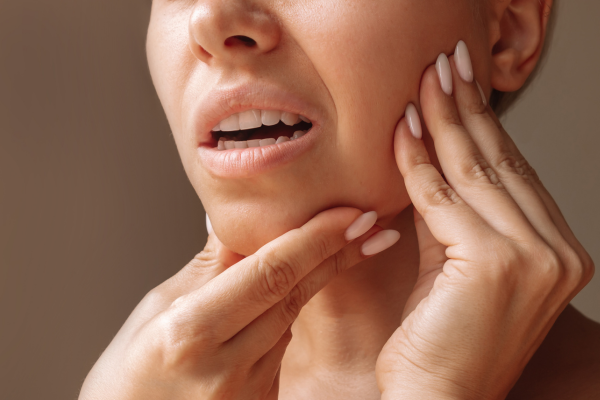
If external injury can be ruled out, TMJ problems may stem from traumatic occlusion (a misaligned bite). The stress from a misaligned bite can cause muscle spasms; in more difficult cases, muscle relaxants may be used to ease the tension on the involved muscles.
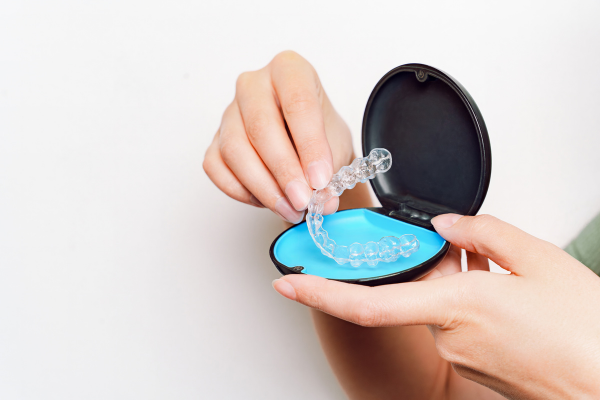
Our goal is to start with the least invasive treatment. If no improvement is observed, then we will progress to the next treatment level. The first step is a splint that is fabricated to fit around your teeth. This prevents the upper and lower teeth from touching, and in 90% of cases, after 2 weeks of wearing the splint, pain is significantly reduced or eliminated. The splint does need to continue being worn (at least occasionally or nightly) to prevent recurrence.
If the splint is not effective, sometimes the bite needs to be adjusted by reshaping the teeth, orthodontics, or replacing bridges and dentures. The final treatment option, although rarely used, is a surgical correction when all other treatment options have been unsuccessful.
Stay in touch with our office and receive dental advice, conveniently delivered to your inbox.
© 2026 JA Haselhorst DDS LTD. All Rights Reserved.
507 S. Main Street, Naperville, IL 60540 │ 630.420.0013
We use cookies to improve your experience on our site. By using our site, you consent to cookies.
Manage your cookie preferences below:
Essential cookies enable basic functions and are necessary for the proper function of the website.