
Office Hours
Mon & Fri 9 AM-6 PM
Tues & Thurs 8 AM-8 PM
Wed & Sat 9 AM-3 PM
Address
507 S. Main Street Naperville, IL 60540
Contact Us
630.420.0013
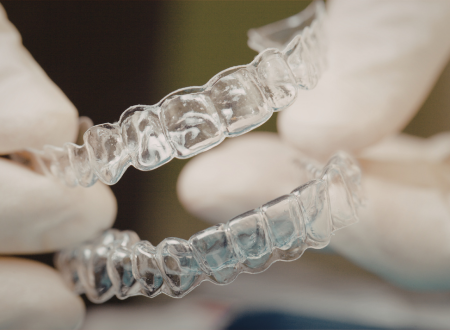
Your teeth endure constant pressure from the ordinary forces of chewing, but add grinding, clenching, and other parafunctional habits into the mix, and damage may be dramatically accelerated. Most people don’t realize how much these unconscious behaviors impact their dental health.
The consequences can be significant. Excessive force from the jaw muscles can create indentations along the gum line, wear through protective enamel to expose sensitive dentin, chip tooth edges and cusps, and can even cause fractures that may lead to infections. Beyond visible damage, these habits could trigger hypersensitivity, neuromuscular pain, tenderness, and muscle fatigue.
The muscles of mastication – those responsible for chewing – often become hyperactive due to stress, anxiety, or ingrained habits. When overworked, they generate excessive forces that teeth simply weren’t designed to withstand, accelerating deterioration over time.
The good news? A remarkably effective remedy exists: a simple dental appliance that protects your teeth from further damage. Dental splints are custom fabricated for your mouth and are typically worn overnight to prevent you from being able to clench or grind your teeth and provide nociceptive feedback to break the cycle.
We have treated many patients who required dental splints, and the response is overwhelmingly positive. If you notice signs of wear, sensitivity, chipping, or experience jaw pain and muscle tenderness, discuss them with your dentist or give us a call at 630.420.0013 to book a complimentary consultation. By addressing muscle control issues now, you preserve your natural teeth and avoid complications from untreated grinding and clenching.
Learn more about our office and team by following us on social media (@napervilledentistry), visiting us online at napervilledentist.com, or giving us a call at 630.420.0013.
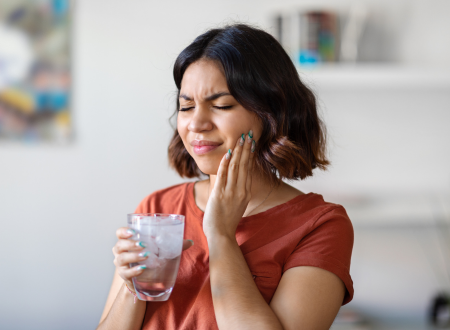
With an annual average of 1.9 million emergency department visits being attributed to tooth pain*, we can safely say toothaches are a big deal. In fact, many say dental pain is right up there with the pain of childbirth! But what if your toothache isn’t really a toothache?
When you experience dental pain, the first step is to get in to see your dentist – not an emergency department! If you go to the emergency department, they will see you and tell you it’s probably dental. You’ll still have to go to a dental office to have your pain resolved permanently. If your pain is sharp, is a result of dental trauma, or you notice swollen gums, it should be treated as an emergency. Several local dentists (me included) offer 24-hour emergency care to get your problem resolved right away.
What’s interesting about dental pain is that it is that you may feel as though you have a toothache and the source of the pain is something different. The close proximity of the nerves in your sinuses, nasal cavity, and jaws can occasionally cause referred pain from something like a sinus infection or radiated pain in which the pain from an irritated nerve may be felt in a different part of the jaw.
In most cases, oral pain is caused by tooth decay, gum disease, infections, sensitive tooth surfaces, worn enamel, grinding, muscle tension, joint issues, and/or dental trauma. By visiting a dentist for an evaluation, he or she will be able to determine the source of the pain and how best to treat it. Waiting to see if the pain resolves is usually not effective long term. Likely the situation will only get worse, making it more challenging or sometimes impossible to treat. Sometimes patients are convinced an antibiotic is a permanent cure, but an antibiotic only resolves an infection temporarily. Sometimes the pain isn’t even due to an infection
No one should have to live with dental pain. We are always here to help, offering hours that are convenient to our patients’ lifestyles. Learn more about our office and team by following us on social media (@napervilledentistry), visiting us online at napervilledentist.com, or giving us a call at 630.420.0013.
* NCHS Data Brief No. 531, June 2025

As much as we try to preserve someone’s natural teeth, there are times that is just not possible, and some – or even all – of them need to be extracted. It can be costly to replace them, which may lead someone to think, “how important are teeth, really?”
Teeth are very important for reasons you may not even realize. The structure of your teeth prevents bone loss and other jaw issues, which is why a dental implant is the best option if a natural tooth is no longer viable. Even if several or all teeth need to be extracted, implants are typically still the recommended treatment rather than removable full or partial dentures. If possible, I recommend avoiding removable dentures – they cause bone loss in many cases, can be a challenge for long-term maintenance, and are usually not adequate for stabilization of the jaws and nutrition (since chewing can be problematic with dentures).
What can happen if you choose not to replace a tooth? The surrounding teeth will shift due to the new gap and may cause your bite to become misaligned, potentially resulting in TMJ (temporomandibular) disorder. The opposing tooth on the opposite jaw no longer has the pressure pushing against it, and that can cause it to drift toward the empty space, often taking the surrounding bone with it.
The importance of teeth for proper nutrition cannot be underestimated, either. Being able to chew effectively and efficiently supports being able to eat a variety of foods that provide the nutritional density that meets your body’s daily needs.
Fortunately, modern dentistry gives us the ability to replace teeth that need to be removed so you can continue enjoying foods you love and have a smile you enjoy showing off. Learn more about our office and team by following us on social media (@napervilledentistry), visiting us online at napervilledentist.com, or giving us a call at 630.420.0013.

Apparently the price of teeth rises faster than a barrel of oil. I remember being thrilled with a quarter (though that was over 40 years ago). Now it seems the average bounty is up to five dollars. It still doesn’t seem fair, though. You should be able to put five bucks under your pillow and get a tooth back when you need one.
So much for fairy tales. I was looking for a survey I heard sometime back about the value of a tooth. I did not find the exact survey, but a similar one. I remember that the chemical-materials value of a tooth was about 75 cents…but what dollar value did people put on their own teeth (these are 1995 dollars)?
In a survey of 1000 men and women, the average person values their smile at $321,000. Forty percent of all respondents said their teeth were worth more than $500,000. Women said that their smiles were worth an average of $353,000, while men only valued their pearly whites at $286,000. Generation Xers, maybe taking their dental health for granted, placed the smallest value on their smiles, $266,000. Respondents age 65+, no doubt eager to keep the healthy teeth they have remaining, placed the highest value on their teeth of any age group ($358,000).
Forty-five percent of women chose a person’s smile over the eyes (30%) and a good physique (14%). Thirty-five percent of men are initially attracted to the smile, 33% to a good physique and 25% to
the eyes.
Floss, brush, and visit your dentist…because putting money under your pillow won’t work.