
Office Hours
Mon & Fri 9 AM-6 PM
Tues & Thurs 8 AM-8 PM
Wed & Sat 9 AM-3 PM
Address
507 S. Main Street Naperville, IL 60540
Contact Us
630.420.0013
Mon & Fri 9 AM-6 PM
Tues & Thurs 8 AM-8 PM
Wed & Sat 9 AM-3 PM
507 S. Main Street Naperville, IL 60540
630.420.0013
Prevent problems from wisdom teeth with extraction.
Your wisdom teeth, or third molars, are the last teeth to emerge from your gums during your late teens, or “age of wisdom,” which gives them their name. They often become impacted or trapped in the jaw bone and gums and fail to erupt as straight and fully functioning teeth. Impacted wisdom teeth nearly always have to be removed.
Why do we have wisdom teeth at all if they have to be removed so often? Human beings once had tougher diets. As our diets became softer and more refined, we no longer needed jaws for strenuous chewing. The jaws failed to develop, leaving little room for third molars. Today, most people experience at least one impacted wisdom tooth.
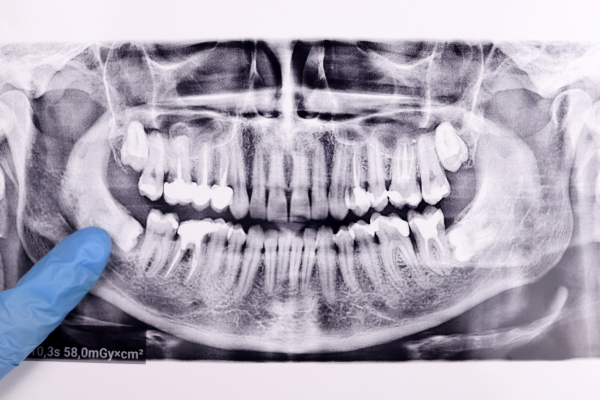
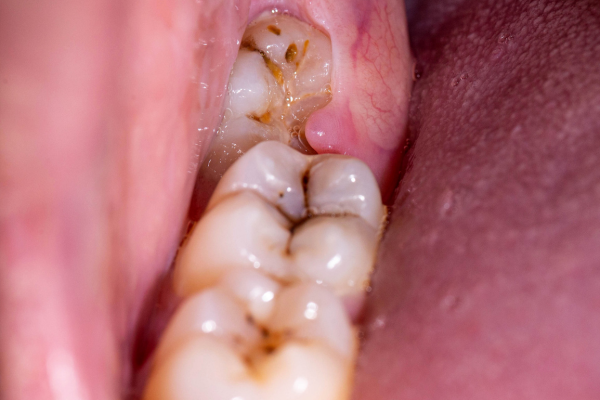
For most people, wisdom teeth should be extracted. It is preferred to remove wisdom teeth prior to adulthood because the roots are not fully formed and the bone is softer, decreasing the chance of damaging nerves and other nearby structures during surgery.
If wisdom teeth are not removed early, they often cause problems such as:
Infection (pericoronitis) – when an impacted tooth breaks through the surface of the gums, it can allow bacteria in and cause an infection that may result in severe pain, swelling, jaw stiffness, and even general illness.
Destruction of the next tooth – the tooth may try to grow where it has no room, eroding the tooth next to it (called resorption).
Pain– an impacted tooth may press against a nerve or the next tooth, causing pain. Infection in a decayed tooth or the gums may also cause pain.
Crowding – nearby molars may become misaligned as wisdom teeth crowd them.
Cysts – when a tooth is impacted, the sac of tissue around the crown remains in the bone. It may fill with fluid and form a cyst that can damage the bone and surrounding structures.
If the wisdom tooth extraction was straightforward, it should not cause much more discomfort after the procedure than a regular extraction. You should exercise caution while talking, eating, and drinking until the local anesthetic has worn off. Surgical extractions (such as when wisdom teeth are impacted or infected) are more complicated, and the severity and length of discomfort depend upon the difficulty of the extraction. For more detailed information, please read our pre-care, post-care, and general information guides found below.
Stay in touch with our office and receive dental advice, conveniently delivered to your inbox.
© 2026 JA Haselhorst DDS LTD. All Rights Reserved.
507 S. Main Street, Naperville, IL 60540 │ 630.420.0013
We use cookies to improve your experience on our site. By using our site, you consent to cookies.
Manage your cookie preferences below:
Essential cookies enable basic functions and are necessary for the proper function of the website.